

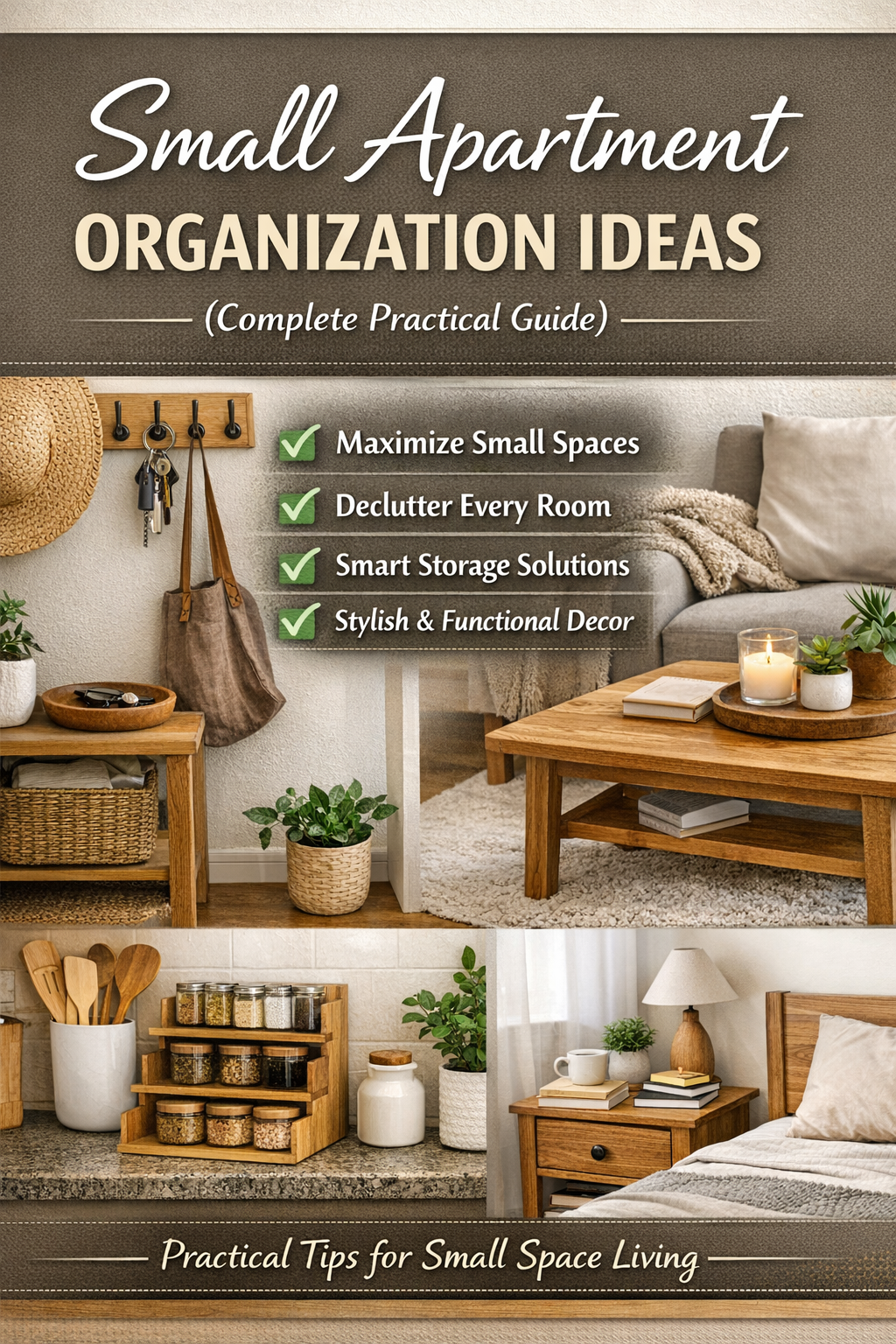

Small Apartment Organization Ideas (Complete Practical Guide)
Living in a small apartment can feel cozy and convenient — until clutter slowly takes over. Limited storage, crowded countertops and scattered everyday items can make even a clean home look messy. The good news is that organization isn’t about having more space — it’s about using space better.
With the right layout, storage habits and simple organizers, even a studio apartment can feel open, calm and functional. This guide covers practical room-by-room organization ideas you can realistically apply without renovations or expensive furniture.
Understand How Small Spaces Work
Before organizing, it helps to understand why small apartments become messy faster.
Large homes hide clutter.
Small homes display clutter.
In compact living spaces every object is visible, so organization should focus on visual calm as much as physical storage.
Follow These Core Rules
- Store items near where they are used
- Use vertical space more than floor space
- Give every item a fixed “home”
- Keep daily-use items accessible
- Keep rarely used items hidden
When objects have assigned locations, mess stops accumulating automatically.
Entryway Organization Ideas
The entrance is where clutter begins — keys, wallets, bags and parcels quickly pile up.
Create a “Drop Zone”
A small dedicated area prevents items from spreading across the apartment.
You can organize entryways using:
- key trays
- wall shelves
- small storage boxes
- mail organizers
This keeps daily essentials visible but controlled. Even a narrow wall can hold a compact organizer that instantly makes the home look tidy when you walk in.
Shoe Control Tip
Keep only frequently used footwear outside. Store occasional shoes elsewhere to avoid visual overload.
Living Room Storage Solutions
Living rooms collect the widest variety of items — remotes, books, chargers, decor and random daily objects.
Use the 3-Layer Method
- Functional items (daily use)
- Decorative items
- Hidden storage
If everything stays on tables, the space always looks messy.
Practical Ideas
- Store remotes in a small box
- Keep chargers in one container
- Use decorative storage instead of open piles
- Limit table items to 3–5 pieces
Decorative storage boxes are especially helpful because they hide clutter while still matching the interior style.
Small Kitchen Organization
Kitchen counters are the fastest place to become overcrowded in apartments.
Countertop Rule
Only daily-use items stay outside. Everything else gets a dedicated place.
Organize by Zones
Instead of storing items randomly, create mini stations:
Cooking Zone
- oil
- spices
- utensils
Tea/Coffee Zone
- mugs
- tea jars
- spoons
Prep Zone
- chopping tools
- small containers
Vertical shelves and tiered organizers help double usable space without expanding the kitchen area.
Bathroom Organization Hacks
Bathrooms have many small items — skincare, toothpaste, cosmetics and accessories — which quickly create clutter.
The Daily-Use Principle
Keep only morning & night essentials visible. Store occasional products separately.
Practical Storage Ideas
- use small shelves instead of wide trays
- group similar products together
- separate skincare and dental items
- keep counters mostly clear
A compact organizer often works better than large containers because it reduces visual heaviness.
Bedroom Organization Ideas
Bedrooms feel relaxing only when visually simple.
Bedside Minimal Rule
Keep only:
- lamp
- book
- one personal item
Everything else goes into storage.
Common Bedroom Clutter Solutions
- jewelry → small compartment box
- accessories → dedicated tray
- extra items → drawer or container
The fewer loose objects around the bed, the calmer the room feels.
Desk & Work-From-Home Setup
Working in small apartments often means sharing space with living areas.
Productivity Rule
A messy desk creates mental stress even if the rest of the home is clean.
Desk Organization Tips
- keep only daily tools on surface
- store stationery together
- separate work and personal items
- hide cables when possible
Compact organizers help maintain focus because your eyes don’t process unnecessary visual information.
Use Vertical Space (Most Important Trick)
Small apartments don’t lack space — they lack vertical usage.
Walls, corners and narrow gaps are powerful storage areas.
You can use vertical storage for:
- books
- toiletries
- kitchen items
- decorative objects
- daily essentials
Vertical organization reduces floor clutter and makes rooms feel larger instantly.
Decluttering Strategy That Actually Works
Organization fails when too many items exist.
Try this simple routine:
The 1-Minute Rule
If something takes less than a minute to put away — do it immediately.
The One-In One-Out Rule
For every new item entering the home, remove one old item.
Weekly Reset
Spend 10 minutes weekly returning items to their places.
Consistency matters more than big cleaning days.
Make Storage Look Decorative
In small apartments storage is always visible — so make it part of decor.
Natural materials like wood blend with interiors better than plastic because they feel warm and intentional rather than temporary.
Instead of hiding storage, integrate it visually:
- neutral colors
- matching materials
- minimal shapes
- repeated textures
When storage matches decor, organization feels effortless.
Common Small Apartment Mistakes
Avoid these habits:
- keeping packaging boxes “just in case”
- oversized furniture
- too many open containers
- no fixed item locations
- storing items far from usage area
Most clutter problems come from placement, not quantity.
Quick Room-by-Room Checklist
Entryway: keys, wallet, daily carry items
Living Room: remotes, chargers, small decor
Kitchen: spices, tools, cups
Bathroom: daily hygiene items only
Bedroom: accessories and essentials
Desk: work tools only
If each room has clear purpose zones, mess disappears naturally.
Final Thoughts
Small apartments don’t require perfection — they require systems.
Start with one area, give items fixed homes and maintain simple routines. Over time your space will feel larger, calmer and easier to maintain.
Good organization isn’t about owning less.
It’s about making everything easier to live with.
