Small Space Wooden Furniture

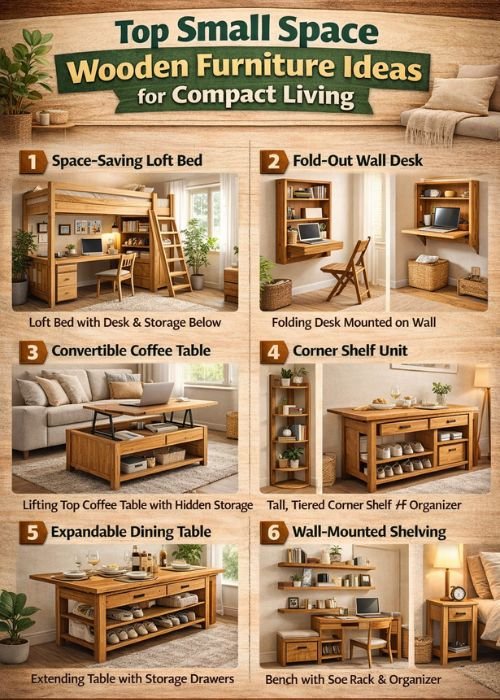
Top Small Space Wooden Furniture Ideas for Compact Living

Top small space wooden furniture ideas have become a necessity as more people move into apartments, studios, and smaller homes. City life is evolving rapidly, and living spaces are becoming smaller.

When space is limited, furniture needs to serve multiple purposes. Wooden furniture offers longevity, comfort, and strong adaptability. Wood introduces a natural feel and warmth to cramped interiors, unlike synthetic materials.

You will find clever space-saving designs, effective tips on buying, and professional styling tips in this guide that will help you make your living space feel open and organized, even in a small area.

Why Wooden Furniture Is Perfect for Small Spaces

Wooden furniture offers a practical and stylish solution for homes where every inch of space matters.

Natural Warmth in Compact Interiors

Small rooms can feel cramped or dull. The right furniture can change that impression almost immediately. The grain is natural and the texture adds warmth unlike plastic or metal pieces.

Light wood tones such as oak or pine reflect light, making the room appear brighter and more spacious. The space feels serene and inviting instead of crowded.

Long-Term Durability vs. Particle Board

Solid wood furniture is built to last. It is not easily bent or broken, hence can be used daily. It is even several years old and still tends to remain in good condition with minimal care.

At first glance, particle boards may look similar, but the boards are prone to wear out. A real wood would be more expensive in the short term, but generally costs less in the long term as you will not need to replace it as often.

Space-Saving Design Flexibility

Wood can be designed and molded easily. That is why numerous foldable tables, stackable stools, and expandable tables are produced using it. It enables intelligent designs that are fitting in small houses.

Wooden designs also provide numerous options in terms of a practical approach whether that is a folding-away piece of furniture or a multi-purpose piece that does not appear to be overly bulky.

Sustainable and Eco-Friendly Appeal

A lot of the furniture manufacturers currently utilise timber that has been sourced in a sustainable manner. Wood can be a renewable material when obtained in the right way.

Well-made wooden furniture can be a great choice in case you are concerned about the environment. It is more durable, less wasteful and in most cases less impactful than disposable cheap material.

Smart Space-Saving Wooden Furniture Ideas

The right furniture can completely change how a small space looks and functions.

Foldable Wooden Wall-Mounted Desk

A foldable desk mounted on the wall is an excellent option for a studio apartment or at-home workspace. It folds flat against the wall when not in use and hence does not consume the essential floor space.

Whenever you need it, just pull it down and you get a decent work surface. Combine that with a thin wooden chair and a couple of shelves on the wall above. This makes the room look clean and organized without crowding the room.

Multi-Functional Wooden Sofa Bed

A wooden sofa bed offers a two-in-one solution. It is used as comfortable seating in the daytime. It can easily become a guest bed at night.

Find easy pull-out mechanisms and solid wood frames with the capacity to withstand frequent use. Some designs also include built-in seat storage and this is ideal in storing additional pillows or blankets. It is an efficient solution that adds a sleeping space without needing an extra room.

Wooden Storage Beds with Built-in Drawers

Small bedrooms require intelligent storage systems. The bed is made of wood with an inbuilt storage to allow you to utilize the space underneath the mattress.

You may keep seasonal outfits or additional bedding or even footwear in it. This saves space in having huge wardrobes and makes the room appear tidy. Hydraulic lift beds come in particularly handy since they are deeper in storage and need not occupy additional space.

Nesting Wooden Tables

Nesting tables are easy and very handy in small living rooms. They are available in groups that fit properly under each other.

In case you have some guests you can pull them out and make them side tables. Then put them together in a stack so that they can save space. They are versatile, portable, and do not feel heavy in the room and add a fashionable touch.

Wall-Mounted Wooden Shelves

Walls are your friend in small houses. Shelves placed on the walls are made of wood and aid in utilizing the space upwards rather than on the ground.

Floating shelves make the shelves look clean. Angles that are left unutilized are used as corner units. Geometric racks are also character adding, but they hold books or decor. These shelves not only serve to organize things, but also make the room look open in the process.

Compact Wooden Dining Sets

In smaller houses, the space used in dining areas is usually limited. A small wooden dining set is a solution to that issue without losing the comfort.

When they are required, drop-leaf tables may be extended and when not in use may be folded. The foldable chairs are compact to store. Tables with extensions are the best when the family is small, and guests are sometimes invited. These designs adapt to your requirements as opposed to occupying space at all times.

Wooden Ladder Shelves

Wooden ladder shelves only lean slightly against the wall and occupy very minimal floor space. Their open-shelf design makes the room appear light.

They are suitable with books, plants, photo frames or storage baskets. They are easy to fit in small rooms as they do not appear bulky and at the same time provide storage utility.

Under-Stair Wooden Storage Units

Space beneath the stairs is usually not utilized. This space is capable of being very functional with wooden drawers or an open shelf.

Shoes, books, or household items could be stored clean out of sight. This solution is beneficial to duplex houses or loft apartments because you are able to increase the storage without necessarily obtaining new furniture to fit into the room.

Choosing the Right Wood for Small Furniture

Selecting the right type of wood plays a big role in durability, appearance, and long-term value.

Solid Wood vs. Engineered Wood

Solid wood is strong and stable. Engineered wood is less expensive and weighs less. Solid wood is a better choice for frequently used furniture such as beds and sofas.

Best Wood Types

  • Sheesham – Stout and full of grain.
  • Oak – Durable and elegant
  • Pine – light and cost-effective.

Finish Options That Make Rooms Look Bigger

  • Light finishes are more reflective.
  • Matte textures reduce glare
  • The harmonious visual effect is achieved with the help of neutral tones.

Dark and heavy finishes have the visual ability to make a room smaller.

Design Tips to Make Small Spaces Feel Bigger

A few clever choices can make even the tiny room seem open and cozy.

  • Choose light wood tones
  • Stick to minimalist designs
  • Avoid bulky carved frames
  • Furniture and mirrors to be mixed up.
  • Use the same colors in the room.

Imagine your room as a canvas. The weaker the visual pauses, the larger the visual pauses.

Budget-Friendly Small Wooden Furniture Options

You do not need a large budget to design a smart and useful small living room.

Consider

  • Ready-to-assemble furniture
  • DIY wooden wall shelves
  • Selling of seasonal products of the famous brands.

Common Mistakes to Avoid in Small Space Furniture Planning

There are numerous tiny rooms which seem congested, not due to their size, but due to the bad layout of furniture.

  • Overcrowding the room
  • Ignoring vertical space
  • Choosing bulky dark designs
  • The omission of appropriate measurements.

Measure twice, buy once. It helps avoid expensive errors and reimbursements.

Conclusion

The right small space wooden furniture may help fully change small living into a comfortable and welcoming experience. The gimmick here is smart multi-purpose designs that would utilize every inch properly but not crammed in the room.

Take good choices, count and invest in quality, but not an impulse purchase. Whenever you desire long lasting well thought wooden solutions, Searunwood collections will have something to match the small modern lifestyle.

Informed choices will bring permanent relief now.

FAQs

Q. What type of wood is best for small furniture?

Oak and Sheesham are highly durable, while Pine is lightweight and budget-friendly.

Q. How can I make a small room look bigger with wooden furniture?

Choose light finishes, avoid bulky designs, and use vertical storage like floating shelves.

Q. Is solid wood better than engineered wood?

Solid wood lasts longer and handles weight better, though engineered wood can be cost-effective for light-use pieces.

Q. What furniture saves the most space in small apartments?

Foldable desks, storage beds, sofa beds, and nesting tables are among the most practical options.
Wooden packaging box racks

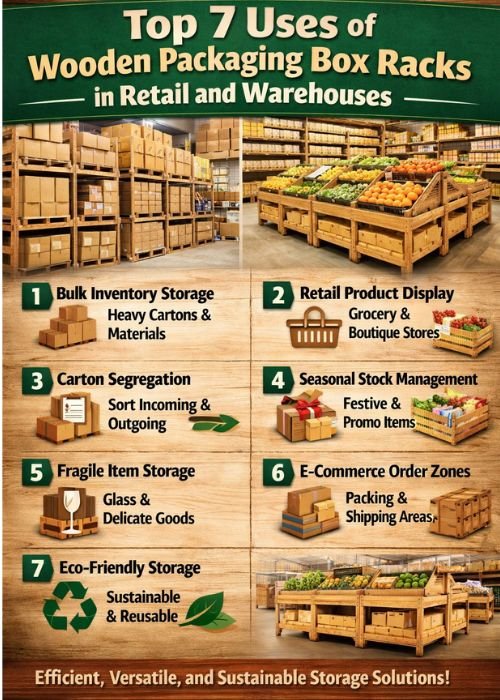
Top 7 Uses of Wooden Packaging Box Racks in Retail and Warehouses

Wooden packaging box racks are one of the most efficient storage systems used by contemporary retail shops and warehouses. They are durable, well-structured, and appealing, with very few substitutes available.

With businesses dealing with increasing inventories and shorter order cycles, an efficient storage system is no longer optional. The retailers require attractive display units and the warehouses require heavy-duty shelve arrangements, which are organized. Meanwhile, many companies are moving toward sustainable materials, which makes wooden systems even more relevant.

Let’s break down how these racks are actually used on the ground.

What Are Wooden Packaging Box Racks?

Wooden packaging box racks are storage racks that are made of solid or engineered wood. They can be used to store boxes, cartons, crates, and packaged goods in a well-organized way.

Most models feature:

  • Open-frame shelving
  • Stackable compartments
  • Reinforced joints for load support
  • Customizable sizes

Unlike metal racks, wooden systems offer a warmer look and are easier to modify. Compared to plastic, they provide greater strength and long-term reliability.

Top 7 Uses of Wooden Packaging Box Racks

Organized Storage for Inventory Management

In warehouses and stockrooms, everything must be in order. Wooden packaging box racks assist in sorting products according to category, size or batch.

This simplifies the process of counting the stock and minimizes confusion in the peak hours. Employees can find items more quickly, thereby enhancing picking rates and replenishment speed. Fewer operational mistakes result from reduced clutter.

Retail Display and Product Presentation

Wooden racks are not only storage units but also effective display tools. They make retail areas warmer with their natural texture.

Boutiques, grocery stores, and specialty shops have wooden box racks to display packaged goods, fresh produce or handmade goods. The layout generates a friendly shopping experience as products are well organized.

When the items are well organized and visible to the customers they find it easier to browse.

Safe Handling of Fragile and Heavy Goods

Wood provides strong support for both fragile and heavy products. Wooden racks are used in the storage of glassware, packaged food products or hardware supplies.

Wooden structures are able to dampen smaller impacts than the thin metal frame and therefore chances of dents or breaking are minimized. Correctly constructed racks distribute weight evenly, preventing overloading and possible collapse.

This minimizes damaged products and leads to long-term cost savings.

Warehouse Bulk Storage

Large warehouses often experience space wastage. The racks of wooden packaging boxes enable companies to stack the goods in a safe and efficient way.

They can be used to store palletized merchandise and boxed stock. They assist in the rotating of stock in businesses when they are properly arranged and assist in stock rotation.

This enhances storage capacity and does not increase floor space.

Eco-Friendly Storage Solution

Sustainability is no longer optional. A large number of businesses are seeking alternatives to plastic storage systems that are greener.

Wood is a renewable resource that can be recycled or reused when managed properly. Wooden racks can also be used for a longer period, depending on how well they are maintained.

Wooden storage systems are compatible with green initiatives of brands that are concerned with the environment.

Customization for Different Business Needs

All the retail stores and warehouses work in different ways. Wooden racks can be designed in size, shape, and plan.

Compartments, labeling sections, or branding elements can be added. Modular designs can be expanded when there are expansion requirements in storage.

This flexibility allows wooden packaging box racks to accommodate seasonal changes in inventory or new product lines.

Cost-Effective Long-Term Investment

The first consideration is the initial cost, while the second is the long-term value. Wooden racks can be repaired and are strong. In case a part is damaged, it can be repaired rather than replaced.

They have a long life span which lowers replacement rate. This reduces maintenance costs and enhances a better payoff over time.

This makes wooden racks a good financial solution for expanding companies.

Key Benefits of Using Wooden Packaging Box Racks

Wooden packaging box racks offer several practical advantages:

  • Strong and durable structure
  • Flexible for various storage needs
  • Visually appealing for retail settings
  • Environmentally responsible choice
  • Cost-efficient over the long term

They combine function and presentation without compromising strength.

Factors to Consider Before Buying Wooden Box Racks

You should analyze your operational requirements before investing.

Check the load capacity of the rack to ensure it can support your product weight. Calculate the available floor space to prevent congestion.

Consider the quality of wood and its surface treatment, particularly when the racks will be exposed to moisture.  Finishing is used to avoid warping and damage.

Lastly, select a reliable supplier that provides consistent build quality and service.

Conclusion

Wooden packaging box racks remain a trusted storage solution in retail settings as well as warehouses. Their flexibility makes them an intelligent investment for organized inventory management and environmentally friendly operations.

We are Searunwood and we are the designers and suppliers of the durable wooden packaging box rack which can be adapted to the current business requirements. In case you are planning to update your storage system, then this is the right time to make a sustainable transition.

FAQs

Q. Are wooden packaging box racks strong enough for warehouses?

Yes. High-quality hardwood or reinforced engineered wood racks can handle significant weight when properly designed.

Q. Are wooden racks better than metal racks?

It depends on the use. Wood offers better aesthetics and customization, while metal may suit extremely heavy industrial loads.

Q. How long do wooden storage racks last?

With proper treatment and maintenance, they can last many years, especially in controlled indoor environments.

Q. Are wooden racks environmentally friendly?

Yes. Since wood is renewable and recyclable, it’s considered a more sustainable storage option compared to plastic alternatives.

Counter Organization

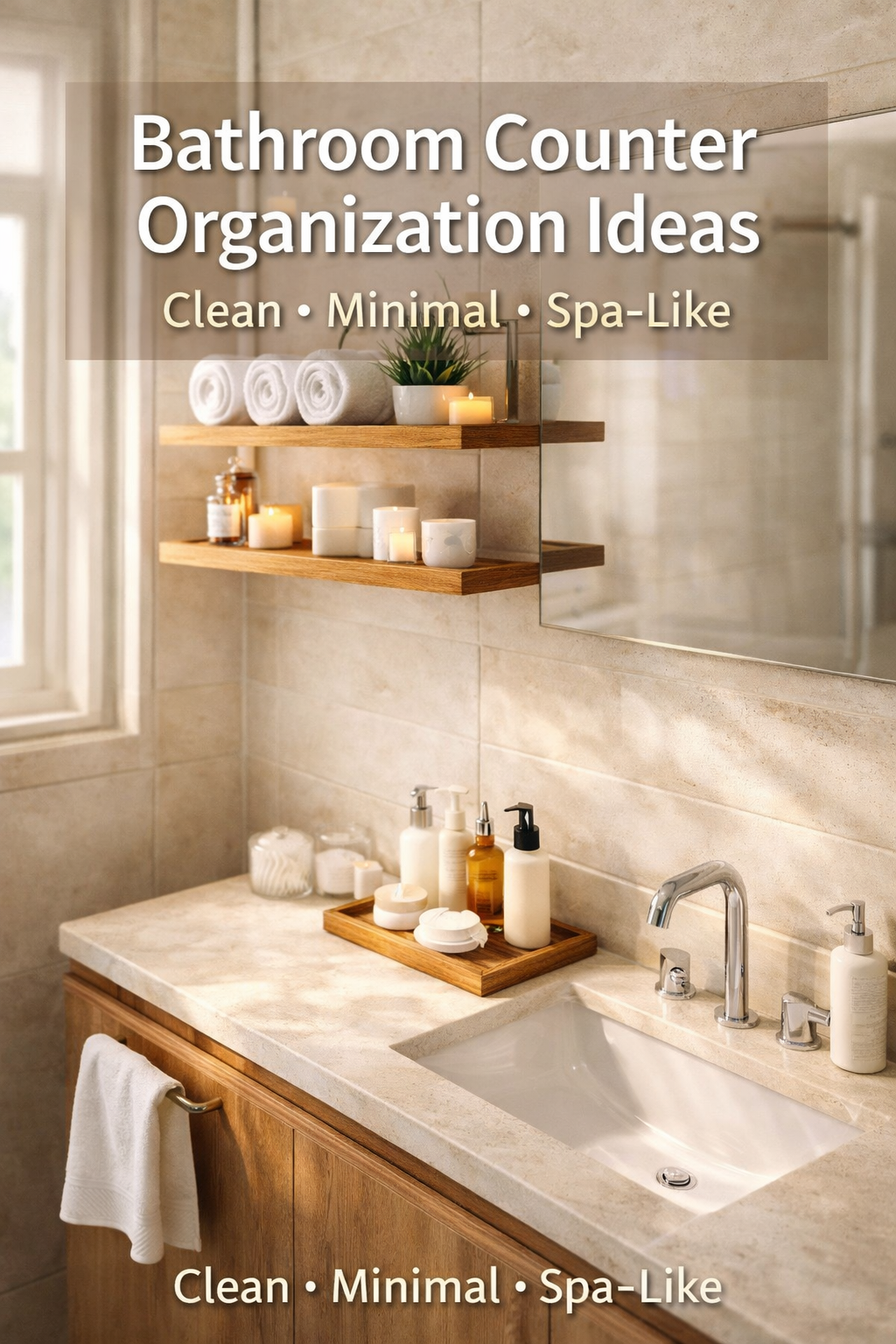
Bathroom Counter Organization Ideas

Your bathroom counter is one of the fastest places to become messy. Skincare bottles, toothpaste, razors, makeup, hair tools, everything lands here because it’s convenient. But an organized vanity saves time every morning, keeps products hygienic, and makes even a small bathroom feel luxurious. This guide will help you create a clean, minimal, and easy to maintain bathroom countertop not just for a day, but permanently.

Step 1: Clear Everything First

You can’t organize clutter you can only move it.

Do this first:

  1. Remove all items from the counter
  2. Clean and disinfect the surface
  3. Sort items into groups:
    • Daily use
    • Weekly use
    • Backup stock
    • Expired products

Important:
Most bathroom counters are messy because backup items live on the surface.

Step 2: Keep Only Daily Essentials

Your counter should support your routine, not store your inventory.

Keep on Counter

  • Hand wash
  • Toothbrush holder
  • 3–5 daily skincare products
  • Hand towel
  • One small tray

Remove From Counter

  • Extra bottles
  • Makeup collections
  • Medicine strips
  • Hair styling tools
  • Backup toiletries

A clean bathroom counter is usually 50% empty space.

Step 3: Create Functional Bathroom Zones

Washing Zone (Near Sink)

  • Soap dispenser
  • Toothbrush holder
  • Face wash
  • Mouthwash

Skincare Zone

  • Moisturizer
  • Serum
  • Sunscreen
  • Cotton pads (small container)

Grooming Zone

  • Comb or brush
  • Razor
  • Daily makeup pouch

Hidden Storage Zone

  • Refills
  • Extra toiletries
  • Hair tools

When every item has a zone, clutter stops automatically.

Step 4: Use Trays to Instantly Declutter

Grouping items makes the counter look organized even with the same number of products.

Use:

  • Marble tray
  • Wooden tray
  • Ceramic tray

Rule: One category = one tray

Example:

  • Skincare tray
  • Oral care tray

Step 5: Add Wooden Decor Display Shelves (Game-Changer)

Instead of crowding the counter, move vertical.

Wooden decor display shelves make the bathroom:

  • Look premium
  • Free up surface space
  • Keep essentials accessible

What to Place on Shelves

  • Rolled towels
  • Daily skincare
  • Small baskets
  • Indoor plant
  • Perfume bottles
  • Candles

Why Wood Works Best

  • Warmer than metal
  • Less clinical look
  • Spa-like feel
  • Matches most interiors

Floating wooden shelves turn storage into decoration.

Step 6: Control Product Bottles

Too many bottles = visual chaos.

Do this instead:

  • Transfer liquids into matching dispensers
  • Keep travel-size bottles outside
  • Store refills inside cabinet
  • Finish one product before opening another

Step 7: Organize Makeup & Tools Properly

Counters become crowded mainly because of grooming tools.

Keep Outside

  • Daily compact
  • Lip balm
  • Comb

Store Away

  • Palettes
  • Hair straightener
  • Curlers
  • Extra brushes

Use:

  • Drawer dividers
  • Heat-proof holder
  • Small pouch system

Step 8: Maintain a Luxury Look

A bathroom looks expensive when it looks simple.

  • Use matching containers
  • Stick to one color theme
  • Keep 40–60% counter empty
  • Add one plant or candle only

Minimal > Decorative clutter

Step 9: Daily & Weekly Reset Routine

Daily (1 Minute)

  • Wipe counter
  • Return items to tray
  • Hang towel

Weekly (5 Minutes)

  • Clean dispensers
  • Remove empty bottles
  • Re-arrange shelf items

Monthly

  • Check expiry dates
  • Remove unused products

Tips for Small Bathroom Counters

  • Use corner trays
  • Install wooden wall shelves
  • Use mirror cabinets
  • Choose multi-purpose organizers

Small bathrooms feel bigger when counters stay clear.

Common Mistakes to Avoid

  • Keeping backups outside
  • Mixing medicine with skincare
  • Over-decorating shelves
  • Ignoring vertical storage
  • Using oversized bottles

Final Thoughts

An organized bathroom counter isn’t about buying more organizers, it’s about reducing decisions.

When everything has a fixed place:

  • Mornings become faster
  • Cleaning becomes easier
  • Bathroom feels calmer

And with wooden display shelves, your storage becomes part of your décor, not clutter.

Wooden Kitchen Organizers & Countertop Storage

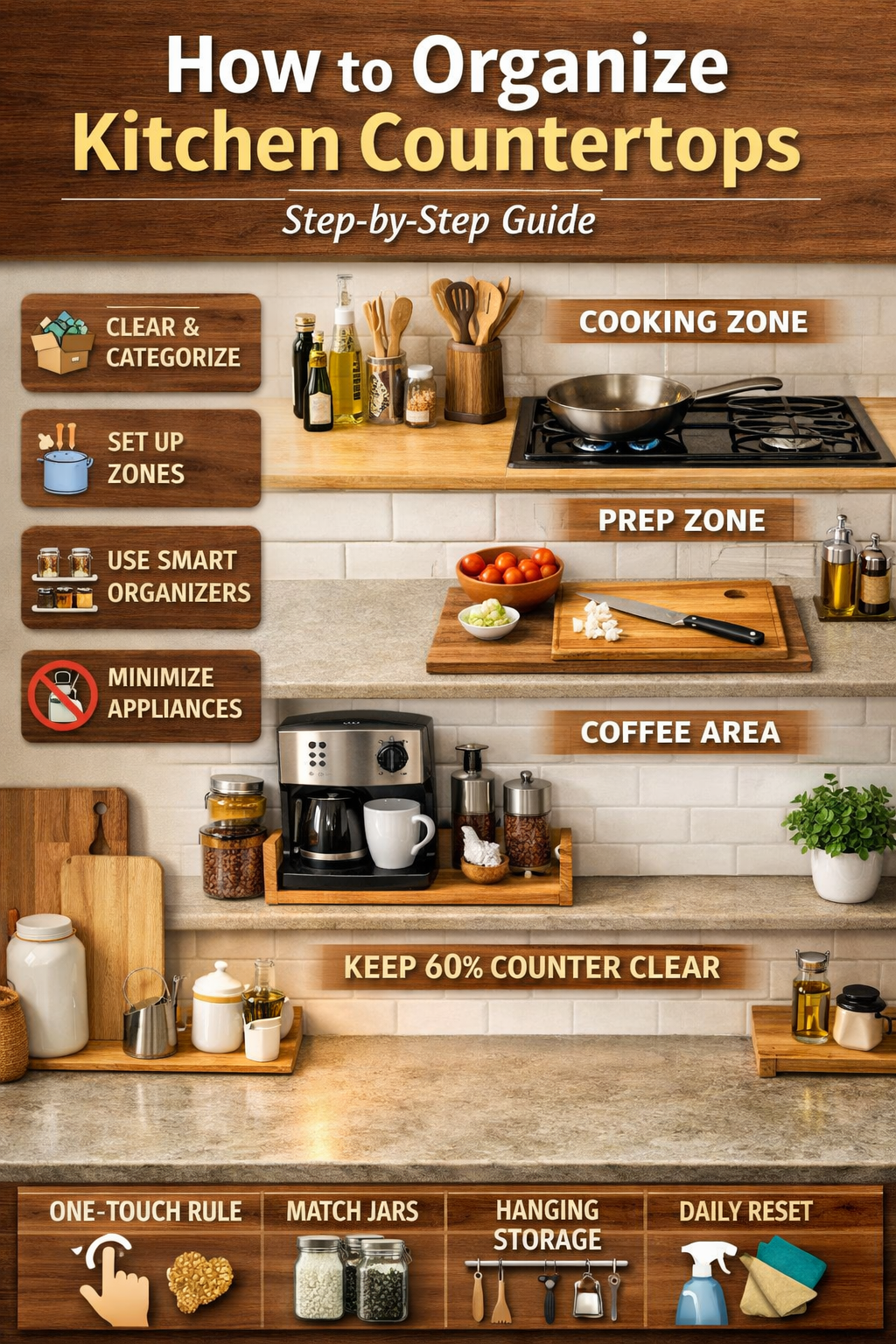
How to Organize Kitchen Countertops

A cluttered kitchen countertop makes cooking stressful, cleaning harder, and your kitchen look smaller than it actually is. The truth is that most kitchens don’t need more storage, they need better organization.

This step by step guide will help you create a clean, functional, and aesthetically pleasing countertop that stays organized permanently (not just for one day).

Step 1: Completely Clear Your Countertops

Before organizing, you must reset the space.

What to do

  • Remove everything from the counter
  • Deep clean and sanitize the surface
  • Sort items into categories:
    • Daily use
    • Weekly use
    • Rare use
    • Decorative

You’ll instantly notice most countertop clutter comes from items that don’t belong there.

Golden Rule:

If you don’t use it every day, it probably shouldn’t live on the counter.

Step 2: Divide the Kitchen into Functional Zones

Professional kitchens are organized by workflow, not by where things randomly fit.

1. Cooking Zone (Near Stove)

Keep only cooking essentials:

  • Cooking oil
  • Salt & pepper
  • Frequently used spices
  • Spatula & ladle holder

2. Prep Zone (Main Workspace)

This should remain the most open area.

  • Cutting board
  • Knife block or magnetic strip
  • Mixing bowls
  • Paper towel holder

3. Cleaning Zone (Near Sink)

  • Soap dispenser
  • Sponge holder
  • Dish brush
  • Hand towel

4. Beverage Zone (Optional)

  • Coffee machine
  • Tea jars
  • Mugs
  • Sugar container

Result: You stop walking back and forth while cooking everything flows naturally.

Step 3: Apply the Countertop Essentials Only Rule

Your counter is a workspace, not a storage area.

Keep on Counter

✔ Daily appliances (kettle, coffee maker)
✔ Cooking tools used every day
✔ 1–2 decor items

Remove From Counter

✘ Grocery packets
✘ Rare appliances
✘ Duplicate tools
✘ Random containers

A clean kitchen usually has 50–70% empty countertop space.

Step 4: Use Smart Organizers (Not More Space)

You don’t need a bigger kitchen, you need vertical storage.

Use Vertical Space

  • Wall shelves
  • Hanging rails
  • Magnetic knife strips

Group Items Together

Use trays to visually declutter:

  • Coffee tray
  • Oil & spice tray
  • Cleaning tray

Small But Powerful Helpers

  • Tiered racks
  • Lazy Susan turntables
  • Utensil holders

These reduce visual clutter instantly.

Step 5: Control Kitchen Appliances

Appliances create 80% of countertop mess.

Keep Outside Only If Used Daily

  • Electric kettle
  • Coffee machine
  • Toaster (if used daily)

Store Away

  • Mixer grinder
  • Blender
  • Food processor
  • Sandwich maker

Pro Tip: Create an appliance parking cabinet with easy access but a hidden design.

Step 6: Follow the One Touch Rule

The habit that keeps kitchens permanently clean.

After using an item, return it immediately don’t place it temporarily.

Most clutter forms from “I’ll keep it here for now.”

Step 7: Create Visual Balance (Make It Look Expensive)

Organization is also about appearance.

  • Use matching jars
  • Stick to one color theme
  • Group items in odd numbers (3 or 5)
  • Leave breathing space between items

A minimal counter automatically looks premium.

Step 8: Daily & Weekly Maintenance Routine

Daily (2 Minutes)

  • Wipe surfaces
  • Put items back
  • Clear sink area

Weekly (10 Minutes)

  • Reorganize cooking area
  • Throw expired items
  • Clean corners

Monthly

  • Remove unused items
  • Rotate seasonal appliances

Consistency matters more than deep cleaning.

Tips for Small Kitchen Countertops

Small kitchens need strategy, not sacrifice.

  • Use wall-mounted storage
  • Choose foldable tools
  • Prefer multi-purpose appliances
  • Utilize corners with corner racks

Small kitchens look bigger when counters stay open.

Common Countertop Organization Mistakes

Avoid these and you win instantly:

  • Keeping every appliance outside
  • Mixing cleaning & cooking items
  • Ignoring vertical space
  • Over-decorating
  • Storing groceries on counters

Final Thoughts

An organized countertop is not about perfection, it’s about systems.

Once everything has a fixed home:

  • Cooking becomes faster
  • Cleaning becomes easier
  • Kitchen looks bigger
  • Stress reduces
Small Apartment Organization Ideas

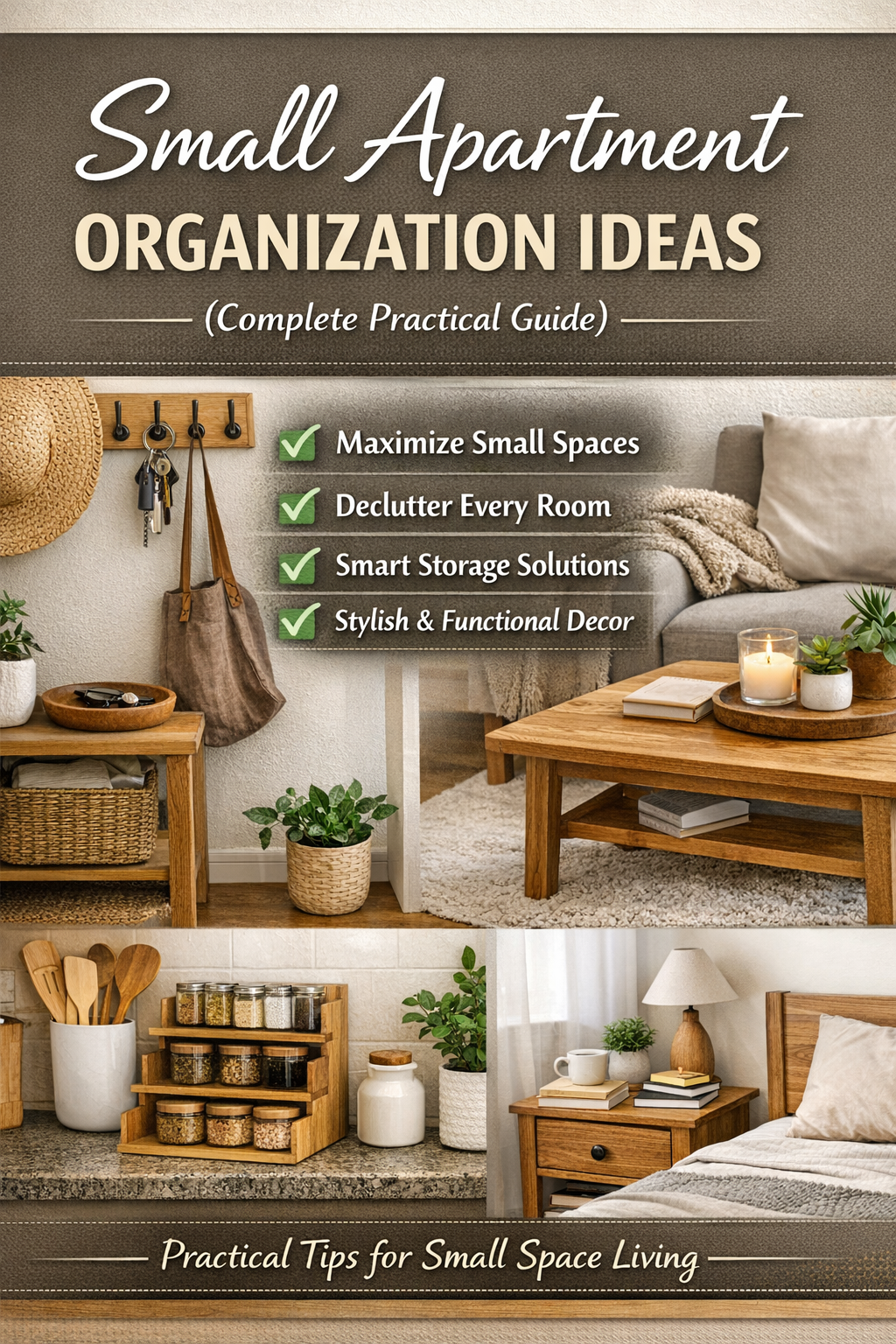
Small Apartment Organization Ideas (Complete Practical Guide)

Living in a small apartment can feel cozy and convenient — until clutter slowly takes over. Limited storage, crowded countertops and scattered everyday items can make even a clean home look messy. The good news is that organization isn’t about having more space — it’s about using space better.

With the right layout, storage habits and simple organizers, even a studio apartment can feel open, calm and functional. This guide covers practical room-by-room organization ideas you can realistically apply without renovations or expensive furniture.

Understand How Small Spaces Work

Before organizing, it helps to understand why small apartments become messy faster.

Large homes hide clutter.
Small homes display clutter.

In compact living spaces every object is visible, so organization should focus on visual calm as much as physical storage.

Follow These Core Rules

  • Store items near where they are used
  • Use vertical space more than floor space
  • Give every item a fixed “home”
  • Keep daily-use items accessible
  • Keep rarely used items hidden

When objects have assigned locations, mess stops accumulating automatically.

Entryway Organization Ideas

The entrance is where clutter begins — keys, wallets, bags and parcels quickly pile up.

Create a “Drop Zone”

A small dedicated area prevents items from spreading across the apartment.

You can organize entryways using:

  • key trays
  • wall shelves
  • small storage boxes
  • mail organizers

This keeps daily essentials visible but controlled. Even a narrow wall can hold a compact organizer that instantly makes the home look tidy when you walk in.

Shoe Control Tip

Keep only frequently used footwear outside. Store occasional shoes elsewhere to avoid visual overload.

Living Room Storage Solutions

Living rooms collect the widest variety of items — remotes, books, chargers, decor and random daily objects.

Use the 3-Layer Method

  1. Functional items (daily use)
  2. Decorative items
  3. Hidden storage

If everything stays on tables, the space always looks messy.

Practical Ideas

  • Store remotes in a small box
  • Keep chargers in one container
  • Use decorative storage instead of open piles
  • Limit table items to 3–5 pieces

Decorative storage boxes are especially helpful because they hide clutter while still matching the interior style.

Small Kitchen Organization

Kitchen counters are the fastest place to become overcrowded in apartments.

Countertop Rule

Only daily-use items stay outside. Everything else gets a dedicated place.

Organize by Zones

Instead of storing items randomly, create mini stations:

Cooking Zone

  • oil
  • spices
  • utensils

Tea/Coffee Zone

  • mugs
  • tea jars
  • spoons

Prep Zone

  • chopping tools
  • small containers

Vertical shelves and tiered organizers help double usable space without expanding the kitchen area.

Bathroom Organization Hacks

Bathrooms have many small items — skincare, toothpaste, cosmetics and accessories — which quickly create clutter.

The Daily-Use Principle

Keep only morning & night essentials visible. Store occasional products separately.

Practical Storage Ideas

  • use small shelves instead of wide trays
  • group similar products together
  • separate skincare and dental items
  • keep counters mostly clear

A compact organizer often works better than large containers because it reduces visual heaviness.

Bedroom Organization Ideas

Bedrooms feel relaxing only when visually simple.

Bedside Minimal Rule

Keep only:

  • lamp
  • book
  • one personal item

Everything else goes into storage.

Common Bedroom Clutter Solutions

  • jewelry → small compartment box
  • accessories → dedicated tray
  • extra items → drawer or container

The fewer loose objects around the bed, the calmer the room feels.

Desk & Work-From-Home Setup

Working in small apartments often means sharing space with living areas.

Productivity Rule

A messy desk creates mental stress even if the rest of the home is clean.

Desk Organization Tips

  • keep only daily tools on surface
  • store stationery together
  • separate work and personal items
  • hide cables when possible

Compact organizers help maintain focus because your eyes don’t process unnecessary visual information.

Use Vertical Space (Most Important Trick)

Small apartments don’t lack space — they lack vertical usage.

Walls, corners and narrow gaps are powerful storage areas.

You can use vertical storage for:

  • books
  • toiletries
  • kitchen items
  • decorative objects
  • daily essentials

Vertical organization reduces floor clutter and makes rooms feel larger instantly.

Decluttering Strategy That Actually Works

Organization fails when too many items exist.

Try this simple routine:

The 1-Minute Rule

If something takes less than a minute to put away — do it immediately.

The One-In One-Out Rule

For every new item entering the home, remove one old item.

Weekly Reset

Spend 10 minutes weekly returning items to their places.

Consistency matters more than big cleaning days.

Make Storage Look Decorative

In small apartments storage is always visible — so make it part of decor.

Natural materials like wood blend with interiors better than plastic because they feel warm and intentional rather than temporary.

Instead of hiding storage, integrate it visually:

  • neutral colors
  • matching materials
  • minimal shapes
  • repeated textures

When storage matches decor, organization feels effortless.

Common Small Apartment Mistakes

Avoid these habits:

  • keeping packaging boxes “just in case”
  • oversized furniture
  • too many open containers
  • no fixed item locations
  • storing items far from usage area

Most clutter problems come from placement, not quantity.

Quick Room-by-Room Checklist

Entryway: keys, wallet, daily carry items
Living Room: remotes, chargers, small decor
Kitchen: spices, tools, cups
Bathroom: daily hygiene items only
Bedroom: accessories and essentials
Desk: work tools only

If each room has clear purpose zones, mess disappears naturally.

Final Thoughts

Small apartments don’t require perfection — they require systems.

Start with one area, give items fixed homes and maintain simple routines. Over time your space will feel larger, calmer and easier to maintain.

Good organization isn’t about owning less.
It’s about making everything easier to live with.

Wooden Packaging Boxes

How to Choose the Best Wooden Packaging Boxes

Wooden packaging boxes are popular in the packaging, storage, and transportation of goods in the manufacturing, logistics, pharmaceutical, and exporting industries.  With the rise in global trade, companies require quality and effective packaging to ensure that their products are not damaged in the process of handling and overland transportation. That is why wooden packaging solutions are popular among numerous companies.

Wooden packaging is gaining more demand due to its sturdiness, adherence to the international shipping requirements, and eco-friendliness. The importance of selecting the appropriate wooden box is that it influences product safety, shipping costs, and brand perception. The appropriate packaging assists in the safe delivery of goods to the destination, compliance and professional appearance.

Benefits of Wooden Packaging Boxes

Wooden packaging remains a preferred choice due to its versatility and performance advantages.

Strength and Durability

Wooden boxes are highly durable and strong. They are perfect in carrying heavy, delicate or costly items. Wooden boxes can withstand stacking pressure, rough handling, and long transportation, unlike cardboard or plastic, which get damaged.

Eco-Friendly and Reusable Packaging

Wood is a renewable material that is naturally available. Wooden packaging boxes can be reused numerous times, repaired in case of damage or recycled. This renders them a pro-sustainability packaging option that supports current sustainability objectives.

Superior Protection for Goods

Goods are well secured in wooden boxes during transportation. They are used to absorb shocks and vibrations, are resilient to stacking pressure and guard products against weather and handling stress. Industrial equipment and export shipments are particularly significant in this form of strong protection.

Customization and Branding Opportunities

Wooden packaging boxes are adaptable to various sizes and designs. Companies are able to introduce brand names, instructions on the boxes or exportation markings. This enhances usability as well as assists in increasing brand exposure.

Types of Wooden Packaging Boxes

Understanding the available options helps match packaging to specific applications.

Solid Wooden Boxes

Heavy and tough packaging is done using solid wooden boxes. They are robust and have the capability of carrying heavy items such as industrial machines and tools without any danger. These boxes are commonly used as export packaging boxes, and the commodities can cover long distances because of their toughness. They are also able to cope with weight, pressure and rough treatment without tearing or bending.

Plywood Packaging Boxes

Plywood packaging boxes are robust but have less weight compared to solid wood boxes. They are pressed together by thin pieces of wood and these make them firm and easy to handle. Their lightweight construction helps minimize transportation costs, particularly in air and sea transportation. Electronics and automotive parts are generally packed in these boxes.

Wooden Crates

Wooden crates have either an open or closed design based on the product. They are suitable with big, heavy or odd-shaped products, which cannot be placed in standard boxes. Open crates are easy to check and airy which is convenient with some goods. The wooden crates have gained popularity in warehouses and logistics since they are convenient and effective.

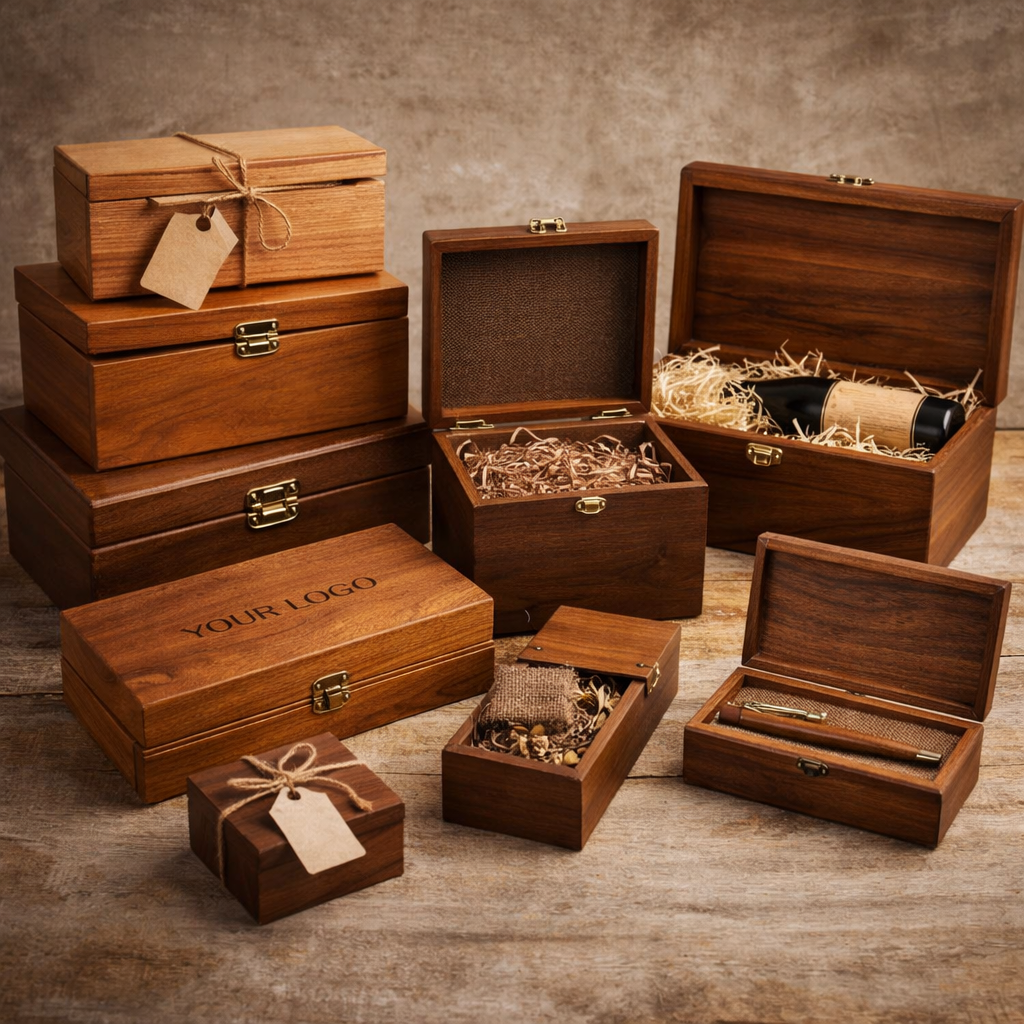
Custom Wooden Packaging Boxes

Precise size and shape – Custom wooden packaging boxes are produced to suit the exact size and shape of a product. This makes the item safe and minimizes the movement during delivery. Additional insurance such as Foams or partitions may be introduced into the box. The company logos or branding can also be added to these boxes hence making them a good option when the standard boxes are not applicable.

Factors to Consider When Choosing Wooden Packaging Boxes

Purpose and Application

It is necessary that you know the product you are packing before you select a wooden box. Think about the weight, frailty or fragility and destructibility of the item. Another thing that you should consider is whether the shipment is used domestically or for international export. Export shipments tend to require stronger boxes, and they have to comply with the strict shipping regulations.

Load Capacity and Durability

Always make sure of the weight carrying capacity of the wooden box. The box must be sturdy enough to support steady weight as well as abrupt movements throughout the transportation. It must also cushion the product against vibrations. Bigger boxes are required that have more wood panels and a stronger bottom to provide additional protection.

Wood Type and Quality

The kind of wood that is used also influences the box strength and price.Lightweight and less expensive, softwood is generally used. Hardwood is more durable and robust to heavy or valuable products. In the case of export packaging, the timber should comply with the requirements of ISPM-15 to be in line with international requirements.

Size, Design, and Customization

The product ought to fit in the box to avoid movement during shipping. Additional protection such as internal cushioning may assist in minimization of harm. It should be easy to lift, stack and handle as well. The designs are forklift-friendly; hence, loading and unloading are quicker and safer.

Cost and Budget Considerations

Consider more than just the price when buying a wooden box. Wooden boxes can be reused several times and it saves money in the long run. A sturdier and tougher packaging can be more expensive in the short run but will provide better value and greater returns in the long run.

Sustainability and Compliance Standards

Sustainability is now a key decision factor in packaging.

  • Timber sourcing is done in a responsible manner, which protects the environment and promotes sustainability in packaging.
  • Fumigated and heat-treated wooden packaging stops the proliferation of pests and insects during transportation.
  • Compliance with international shipping standards will prevent the emergence of various customs issues, delays of shipments, and other expenses.

Using certified wooden packaging protects both shipments and brand reputation.

Common Mistakes to Avoid

Avoid these frequent errors when selecting wooden packaging:

  • Application of wood of poor quality or untreated material will reduce strength of the packaging and expose the product to higher chances of damage during transportation.
  • Shipments may be held up, fined, or returned at the port due to ignoring ISPM-15 or export compliance regulations.
  • Failure to select the appropriate size or design may lead to the movement of products within the box and damages.
  • By omitting correct cushions or internal support, fragile or heavy goods lose the level of protection.

These mistakes often result in damaged products, higher logistics costs, and unnecessary delays.

Conclusion

Choosing the best wooden packaging boxes requires a careful evaluation of product requirements, durability, compliance standards, and long-term value. From solid wood and plywood options to fully custom solutions, the right packaging ensures protection, efficiency, and sustainability.

By partnering with an experienced provider like Searunwood, businesses can secure reliable, compliant, and cost-effective wooden packaging solutions that support safe transportation and strong brand credibility.

Frequently Asked Questions (FAQs)

Q. What are wooden packaging boxes used for?

Wooden packaging boxes are used to safely transport, store, and export heavy, fragile, or high-value goods across industries.

Q. Are wooden packaging boxes suitable for international shipping?

Yes, when heat-treated and ISPM-15 compliant, wooden packaging boxes are widely accepted for global exports.

Q. What is the difference between plywood boxes and wooden crates?

Plywood boxes are enclosed and lightweight, while wooden crates may be open or closed and are better for bulky items.

Q. Can wooden packaging boxes be customized?

Custom wooden packaging boxes can be tailored in size, strength, and branding to meet specific product and logistics needs.

Wooden Home Decor

Wooden Home Decor: Best Types to Elevate Your Living Space

Wooden house decor is a common favorite of modern interior design due to its coziness, style, and versatility. Wooden elements are also used in minimalistic apartments and classic houses, creating a natural touch that makes the space look warm and harmonious.

Wood is an ancient resource that is strong, sustainable, and durable. Wooden decor refers to wall decor, furniture, lighting, accessories, and storage items that help homeowners improve the appearance and functionality of their living spaces.

Benefits of Wooden Home Decor

Wooden home decor offers more than visual appeal; it brings warmth, durability, and a natural balance that enhances both modern and traditional living spaces.

Natural Aesthetics and Warmth

Wood brings natural textures and colors that soften contemporary interiors. It makes the environment warm and creates a balance between the cold materials such as glass or metal.

Durability and Longevity

Wooden decor can be of high quality and can last decades with little maintenance. Hardwoods, especially, do not wear or age like synthetic products do.

Eco-Friendly and Sustainable Appeal

Wooden elements of the decor are responsibly sourced, enhancing sustainability.  Reclaimed and recycled wood also makes the solution even more eco friendly, and provides a layer of character.

Versatility Across Interior Design Styles

Wooden decor is suitable for most interiors. They are also used in modern and minimalistic houses to give plain, clean rooms a warm touch. The rustic and farmhouse interiors emphasize the use of wood to accentuate the natural texture whereas Scandinavian and traditional interior designs make use of the wood to make the interior to be cozy and timeless.

Best Types of Wooden Home Decor

From statement furniture pieces to subtle decorative accents, wooden home decor comes in a wide variety of styles that effortlessly combine functionality with timeless design.

Wooden Wall Decor

Wooden decor on the wall also serves to fill in the empty wall spaces of the room and does not make the room look heavy. Wall panels and cladding made of wood are also used to provide texture and insulation. Wooden carved wall art adds an artistic touch and represents traditional craftsmanship. Wooden wall shelves and racks are handy to place decor of items as well as offering additional storage.

Wooden Furniture Accents

Furniture accents aid in bringing shape and balance to a room. The use of coffee tables and side tables can be helpful, and they tend to be the centre of the living rooms. Stools as well as benches made of wood are easily adjustable to provide seating and can be shifted easily when required. Console tables and accent chairs enhance the appearance of the entrances and the lounge.These wooden objects are as simple as statement jewelry, yet produce a strong visual effect.

Wooden Lighting Fixtures

Wooden lighting fixtures produce a soft light and make a room cozy and warm. Pendant lights and wooden lamps are used to produce a rather tranquil and homey mood. Chandeliers made of wood and other decorative elements appear fashionable yet natural. A combination of rustic and modern wooden lights is appropriate in modern houses.

Decorative Wooden Accessories

Wooden elements are small objects that help complete a room.  Bowls and vases made of wood are pleasant on shelves and tables. Photo frames, wooden showpieces, and clocks give out pure beauty to the room. Wooden products are destined to be special as they are individual and intimate.

Wooden Storage and Organization Items

Wooden storage products are used to keep the home tidy. Cabinets and boxes of wood are helpful in the storage of items without messing up the room. Wooden storage units are suitable for kitchens, small desks, trays, and organizers.  Multi-purpose wooden storage units are excellent for small houses since they do not consume much space and are also attractive simultaneously.

Popular Wood Types Used in Home Decor

Choosing the right wood determines durability and aesthetics.

  • Teak wood: Moisture-resistant and premium in appearance
  • Oak wood: Strong, grain-rich, and timeless
  • Sheesham (Indian Rosewood): Dense, durable, and visually striking
  • Pine and reclaimed wood: Affordable, sustainable, and rustic

How to Choose the Right Wooden Home Decor

Choosing the right wooden home decor requires a thoughtful balance between aesthetics, space, and practicality to ensure each piece complements your interior and lifestyle.

Match Decor With Interior Style

Select wooden decor which corresponds to the general style of your house. Light wood should be used in the minimal and modern interior, whereas wooden finishes of the darker colors should be used in the traditional and classic interior.

Consider Space, Color, and Finish

The room and color option are important in the choice of wooden decor. Light wood shades of small rooms make them larger. Matte finishes suit modern interiors, while glossy finishes are ideal for classic and elegant spaces.

Maintenance and Care Considerations

Maintenance and care considerations aim to reduce noise levels within the building and minimize the chance of tripping during the incident.

Maintenance Tips for Wooden Home Decor

Proper care extends the life of wooden decor.

  • Clean using a dry cloth on a regular basis.
  • Clean with weak wood cleaners occasionally.
  • Do not expose wooden items to dampness or direct sunlight.
  • use polish or oil occasionally.
  • Prevent termites with protective measures.

Well-maintained wooden decor ages gracefully, developing character rather than wear.

Conclusion

Whether a wall accent or a storage unit, options in home decoration are numerous, enhancing both the look and functionality of the home. Wooden decor provides unbeatable beauty, sustainability and value when carefully selected.

We also believe that at SearunWood we make wooden decor that is both designed, durable, and environmentally responsible so that homeowners can invest in the decor that lasts.

Frequently Asked Questions (FAQs)

Q. What is the best wood for home decor?

Teak and Sheesham are considered the best due to their durability, resistance to moisture, and premium appearance.

Q. Is wooden home decor suitable for modern homes?

Yes. Wooden decor complements modern interiors by adding warmth and contrast to minimalist designs.

Q. How do I maintain wooden decor items?

Regular dusting, occasional polishing, and protection from moisture are sufficient for long-term maintenance.

Q. Is wooden decor eco-friendly?

Wooden decor made from sustainably sourced or reclaimed wood is highly eco-friendly and recyclable.

Q. Does wooden decor increase home value?

High-quality wooden decor enhances aesthetics and durability, which can positively impact perceived home value.